
Redefining the Impact Market: Why Community-Led Models are the New Strategic Imperative
By RLabs
May 11, 2026
Follow us:
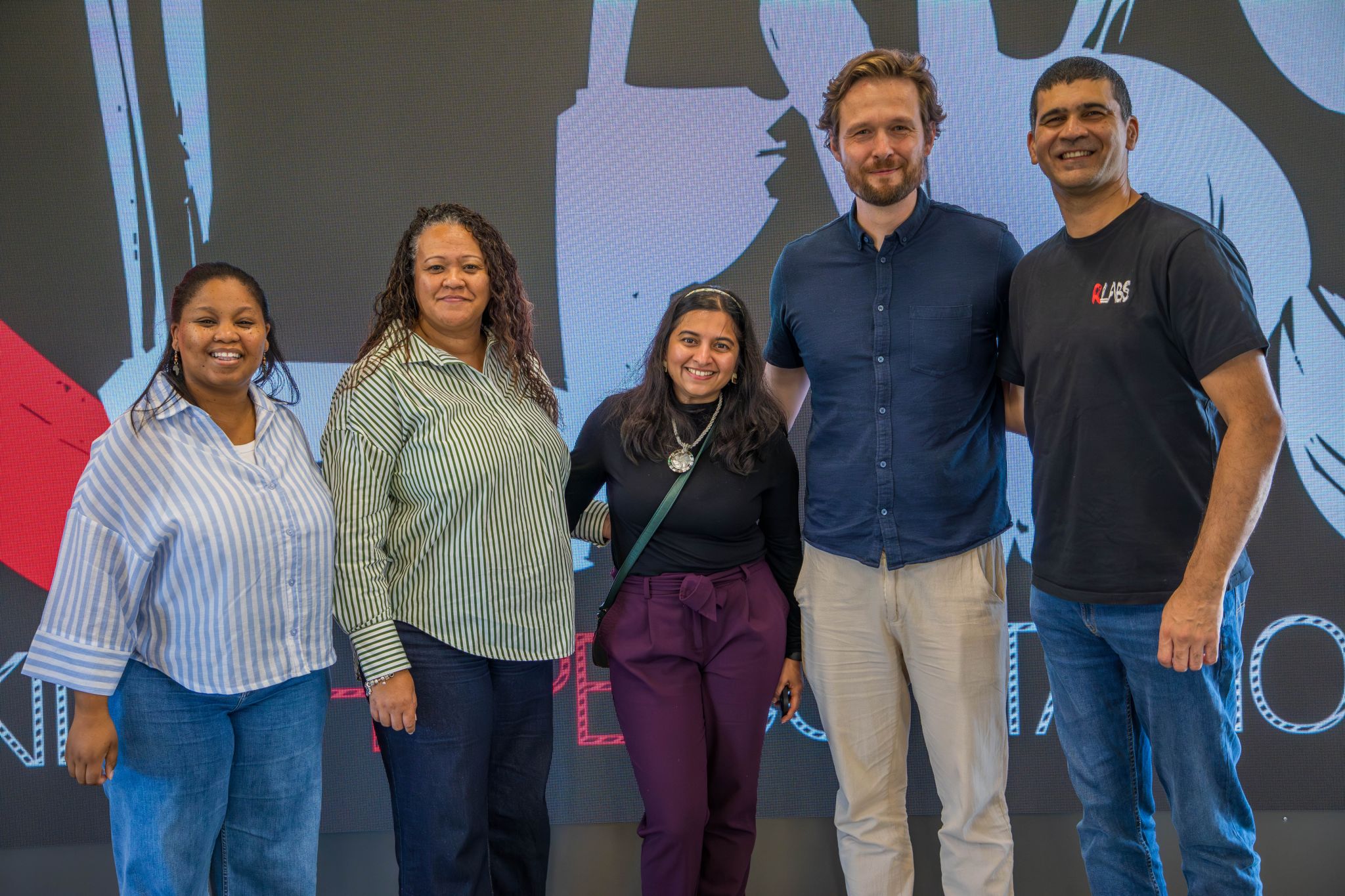
In a recent visit by Daniel Nowack, Head of Social Innovation for the Schwab Foundation for Social Innovation and his colleague, Anushree Warrier, Social Innovation Specialist, we were blessed with some invaluable insights.
The global outcomes funding market is currently estimated at a staggering $185 billion. Yet, as this capital swells, so does the “critical gap” between institutional priorities and the lived realities of grassroots communities. To close this divide, we must move beyond viewing social impact as a peripheral charitable endeavor and recognize it for what it truly is: a core driver of the future economy.
According to Daniel “Social innovation is becoming a strategic business capability, addressing both sustainability issues and business objectives,” and nowhere is this more evident than in the shift toward community-led economic models.
Beyond “Easy” Metrics: The Search for Substance
For too long, traditional impact measurement has defaulted to “easy” data, service delivery outputs or raw employment numbers. While quantitative frameworks like IRIS+ have provided a necessary foundation, they often fail to capture the “intangible” indicators of community health: resilience, agency, and social cohesion.
At the World Economic Forum, we are seeing leaders like RLabs advocate for a more nuanced approach. They argue that impact isn’t just a metric on a spreadsheet, it is a verified story of a life reconstructed. When we invite “problem experts” within communities to co-design the definition of success, the resulting outcomes are not only more relevant, they become contagious.
As a champion for women’s economic empowerment and startup ecosystem development, Rene Parker, Director of RLabs, Founder of RLabs Women and Board Chair of AfriLabs, has spent nearly two decades at the forefront of inclusive innovation. Her leadership is rooted in the belief that communities are not beneficiaries, but co-creators.
Her work in building scalable social enterprises has been instrumental in shifting the global narrative from top-down philanthropy to community-driven transformation.

The Architecture of an Impact-Based Economy
The transition from fixed, shrinking budgets to a dynamic, tradeable impact economy is already underway. Through platforms like Zlto, we are seeing the emergence of Impact Credits, a financial instrument that redefines value by unlocking human potential, the world’s most underutilized resource.
In this model:
Outcome-Based Funding: Value is unlocked when community-defined results are achieved.
Local Resilience: Credits circulate within the local economy, fueling small businesses and sustaining jobs where they are needed most.
Human-Centered Repayment: Success is measured by verified social outcomes rather than traditional currency.
This shift ensures that economic value is directly tethered to human well-being, transforming “doing good” into a tradeable asset that scales through networked ecosystems.
A Global “Job Share” for Transformation
Scaling these innovations requires a clear division of labor within the global development ecosystem. I see this as a strategic “job sharing” arrangement:
Local Organizations: These are the architects on the ground. They possess the deep roots and trust necessary to design and deliver solutions that actually work.
Global Platforms: Our role at the World Economic Forum is to act as the amplifier, connecting these localized, proven models to international decision-makers and institutional capital.
From Participation to Leadership
As active agents of social impact, the ultimate measure of RLabs’ success will not be how much capital we deploy, but the degree of agency we restore in the communities we serve. As we navigate a global landscape increasingly defined by AI and automation, our greatest hedge against instability remains the human spirit.
So, by integrating social innovation into the fabric of our business strategies, we move beyond the limitations of philanthropy. In addition to creating a more inclusive market, we are transitioning to a future where communities are entrusted as the primary authors of their own prosperity.
Impact Credits:
Daniel Nowack
Head of Social Innovation
Schwab Foundation for Social Entrepreneurship and World Economic Forum